
When central banks announce interest rate decisions, most eyes immediately turn to the Federal Reserve.
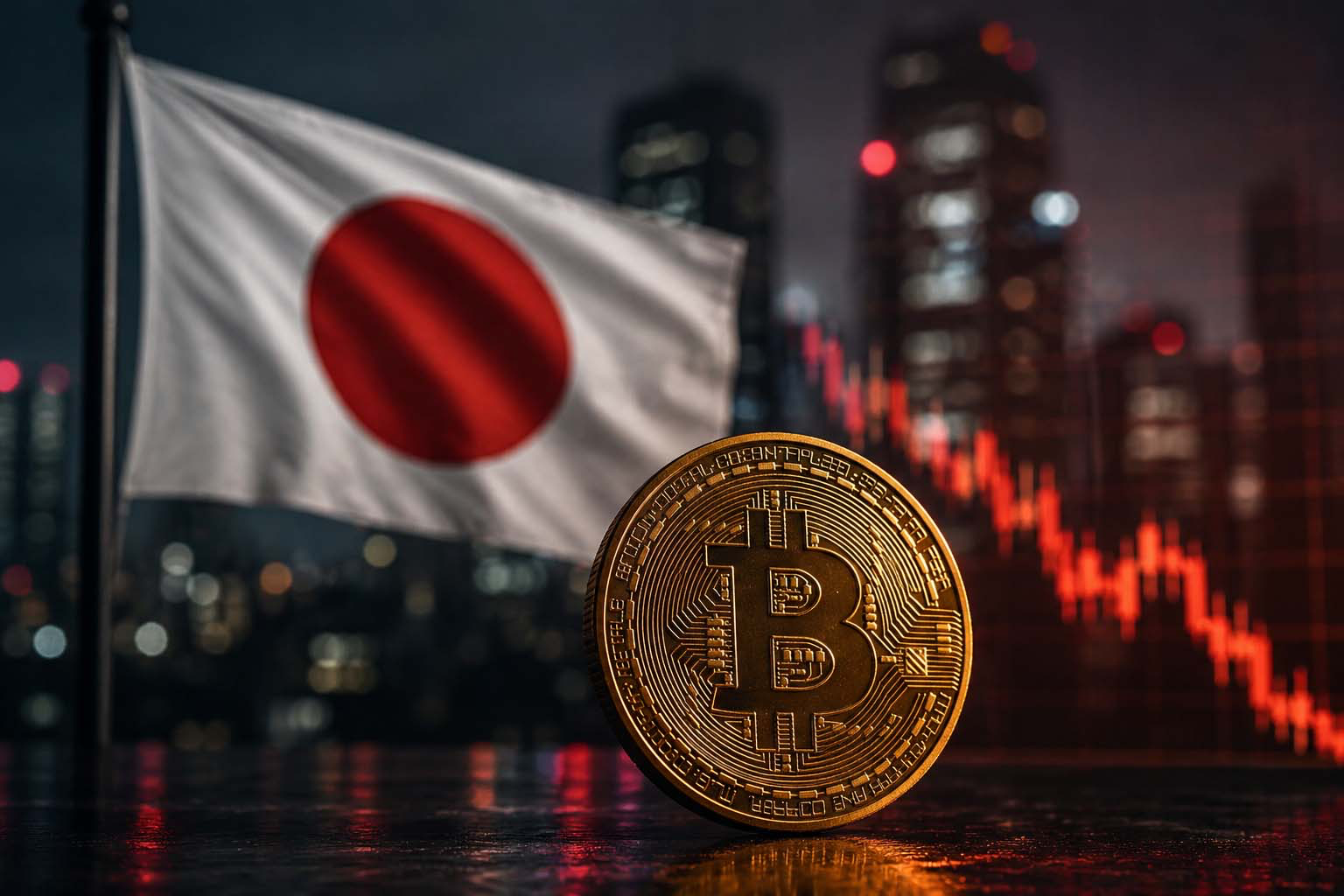
But in recent years, another institution has quietly become one of the most important players in global markets: the Bank of Japan (BOJ).
At first glance, it may seem strange that a decision made in Tokyo could impact Bitcoin, U.S. stocks, or emerging markets. A few years ago, many crypto investors would have probably ignored such news altogether.
However, one thing became increasingly clear during and after the approval of Spot Bitcoin ETFs: crypto and traditional finance are no longer operating in separate worlds.
In reality, global financial markets have always been deeply connected. The difference today is that Bitcoin has become part of that system.
To understand why Japan matters, we first need to understand its unique role in global finance.
The World’s Cheapest Money
For decades, Japan maintained some of the lowest interest rates in the world. At times, rates were even negative.
Think about it this way:
Imagine a bank offering you money at almost no cost. Naturally, you would look for opportunities to invest that money in assets with higher potential returns.
That is exactly what global investors did for years.
They borrowed Japanese Yen at extremely low rates and invested that capital into:
U.S. stocks
Technology companies
Gold
Emerging markets
Bitcoin and other cryptocurrencies
This system injected enormous amounts of liquidity into global markets for years.
What Happens When the Water Starts Leaving the Pool?
Think of global financial markets as a large swimming pool.
For decades, Japan has been one of the faucets continuously filling that pool with liquidity.
As long as interest rates remained extremely low, money kept flowing into the system.
But when Japan begins raising rates, that faucet starts to tighten.
Some investors also begin reducing risk and closing positions they have held for years.
As a result, liquidity starts to leave the pool.
And when liquidity declines, risk assets often come under pressure.
Bitcoin has increasingly become part of that group.
A Real Example from 2024
We don’t have to look very far back to see this dynamic in action.
After the Bank of Japan raised interest rates in July 2024, investors began unwinding Yen-funded positions that had been built over many years.
Within just a few days, Bitcoin fell by roughly 23%, dropping from around $64,000 to nearly $49,000.
At the same time:
The Japanese Nikkei Index experienced sharp selling pressure
U.S. technology stocks weakened
Risk appetite declined across global markets
This wasn’t caused by a crisis in Japan.
It was the result of a financial model that had fueled global liquidity for years beginning to change.
Why Bitcoin Is More Sensitive Today
In Bitcoin’s early years, price movements were mostly driven by developments within the crypto ecosystem itself.
Today, the landscape looks very different.
The market now includes:
Spot Bitcoin ETFs
Large asset managers
Banks
Institutional investors
Bitcoin investors are no longer just early adopters and retail traders.
Many of the largest participants in the market are also active in equities, bonds, commodities, and foreign exchange markets.
When global capital flows change, Bitcoin feels the impact as well.
In fact, some of Bitcoin’s strongest rallies over the past few years have coincided with periods of expanding global liquidity.
Is a Rate Hike Always Bad?
Not necessarily.
What matters most isn’t the rate hike itself, but how quickly it happens and whether markets are prepared for it.
Think about driving a car.
Slowly taking your foot off the gas pedal feels very different from suddenly hitting the brakes.
The same principle applies to central banks.
Markets can usually adapt to gradual and well-communicated policy changes.
Unexpected and aggressive moves, however, tend to increase volatility.
That is why investors pay attention not only to the decision itself, but also to the message that comes with it.
What Are Markets Watching Today?
The key question is no longer whether Japan will raise rates.
The real question is how fast it will move.
While much of the world has spent the last few years adjusting to higher interest rates, Japan remained an exception for a long time.
Now investors are asking:
“What happens to global liquidity if Japan continues moving toward tighter monetary policy?”
The answer matters not only for the Japanese Yen, but also for Bitcoin, Nasdaq stocks, and virtually every major risk asset.
Final Thoughts
At first glance, a Bank of Japan meeting may seem irrelevant to crypto investors.
But today’s financial system is connected through countless invisible links.
For years, Japan provided one of the cheapest sources of capital in the world, helping fuel liquidity across global markets.
That is why every signal coming from Tokyo is now closely watched not only in Japan, but also in New York, London, and across the crypto industry.
Because today, Bitcoin is no longer influenced solely by what happens inside the crypto ecosystem.
It is increasingly shaped by the same global economic forces that move the rest of the financial world.